

The fight moved down the stack
Something shifted in clean energy last week. The story is not that a blue wave will revive federal climate policy. Congress will start to create action, with the potential to be vetoed. The real story is that the decisions that matter moved down the stack: from the electron to the institution, and from Congress to the statehouse and most of all to the utility commission.
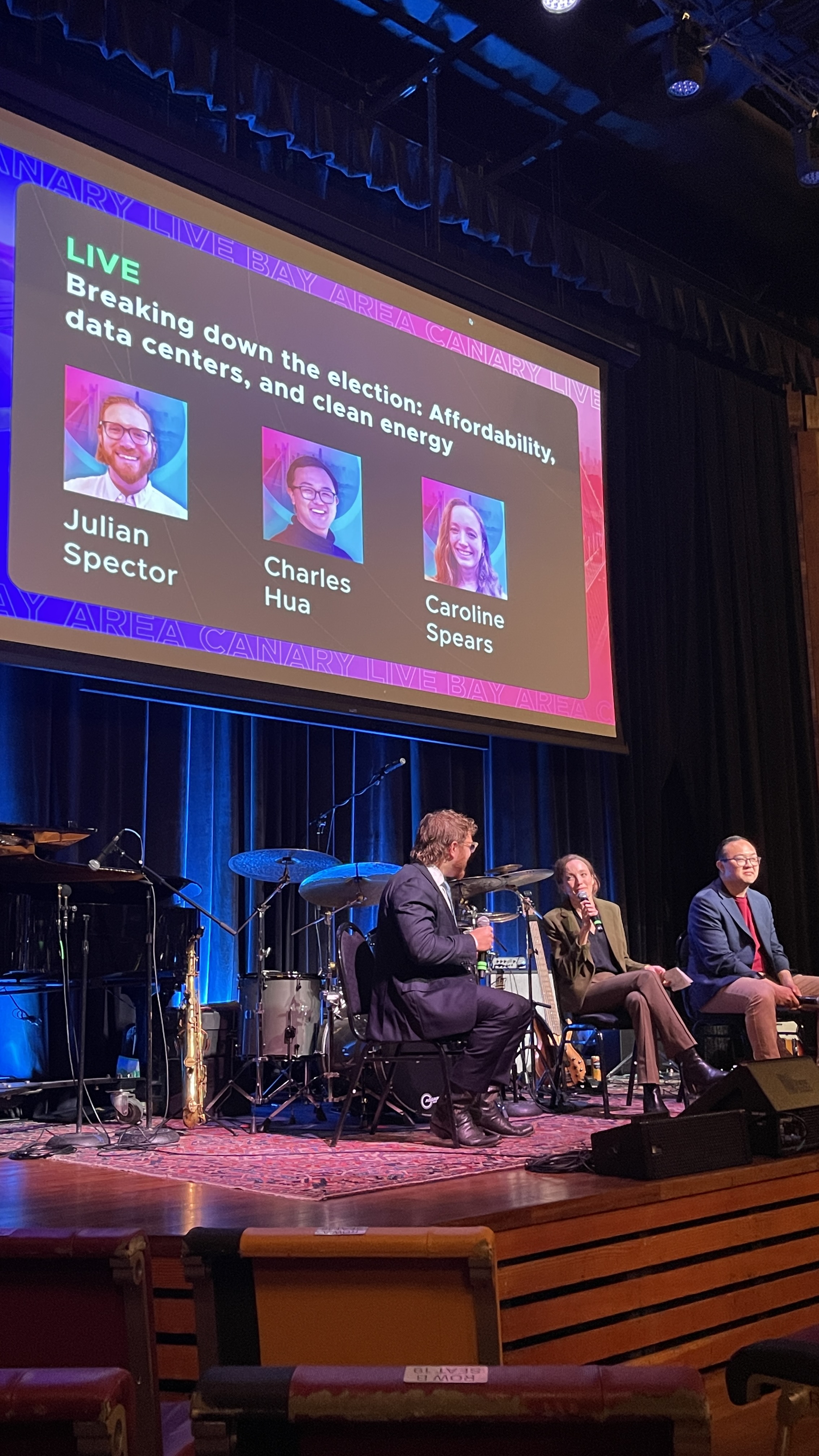
I spent an evening with the Canary Media Live Bay Area conversations, and one line from Charles Hua of PowerLines framed the whole night. For the first time in US history, he said, power was on the ballot. Not political power, electric power. People voted on their utility bills.
That is the shift worth building around. For fifteen years the clean energy argument was about the price of a solar panel and the value of the electricity it sent to the grid. That argument is largely over. The new one is about who runs the grid, who pays for it, and whether the institutions that govern it can actually execute. Affordability became the operating system for the whole transition, and everything downstream now runs on it.
Here is what comes next, and where each shift can still fail.
The map doubled, but a map is not a mandate
Caroline Spears of Climate Cabinet gave the headline number. Before the election, you could pass clean energy and climate policy in about one third of the country. After it, about two thirds. Democrats hold 21 or more state trifectas now, adding Michigan, Minnesota, Nevada, Pennsylvania, and Wisconsin. Dave Roberts has a line that the one weird trick to 100% clean electricity is a trifecta, and it has held up for a decade. So the opportunity doubled overnight.
But is critical to know that a trifecta is permission, but execution is what makes it material. The question is how do we go from being a law to put electrons in homes? The proof is sitting right here in California, which has had unified Democratic control for years and still leads the country in writing rules it slowly implements. What to watch next is the 2027 legislative sessions, which have already started. Texas filed bills the Monday after the election.
The energy commission is the new battleground
So what are the Public Utility Commissions (PUCs) and why do they matter? PUCs are the three-to-five-person bodies that decide whether a utility can spend another billion dollars and charge you for it, and what kind of power plants get built, among MANY other things.
Charles Hua told a story about a man he met in line at a conference three years ago who said he wanted to run for the Georgia Public Service Commission. Hua laughed at him. That man, Peter Hubbard, now sits on a commission that flipped to a Democratic majority for the first time since 1995.
This is where the leverage is. Nearly every incumbent commissioner who faced voters this cycle lost or declined to run. In Alabama, incumbents pulled 25% in their primary. Next year, 43 new commissioners will be appointed by governors. About ten states elect these seats. The other forty fill them by appointment, which means the governors' races you just watched will shape utility policy for years. These commissions decide data center cost allocation, net metering, utility return on equity, and the capital spending that drives your rate.
Two critical pointers:
- Attention is the whole game. The old playbook is to make the consequential decision when nobody is watching. On December 19, 2025, the Georgia commission certified about 9,885 megawatts of new generation for Georgia Power, a mix of new gas, storage, and power contracts, a week before Christmas and two weeks before new commissioners took office. Louisiana gutted its energy efficiency rules in a remote venue near the Texas border. Expect more of these rushed decisions before new commissioners are seated.
- Winning the seat is the start. A pro-clean-energy majority still faces the same utility lobbying, the same credit-rating arguments, the same pressure that captured these bodies in the first place. The majority has to actually use its votes.
If you work with anyone near a governor's transition team, the commissioner appointments are the highest-leverage decision on the table right now. PowerLines published a 101 for exactly that audience.
From the panel to the fleet
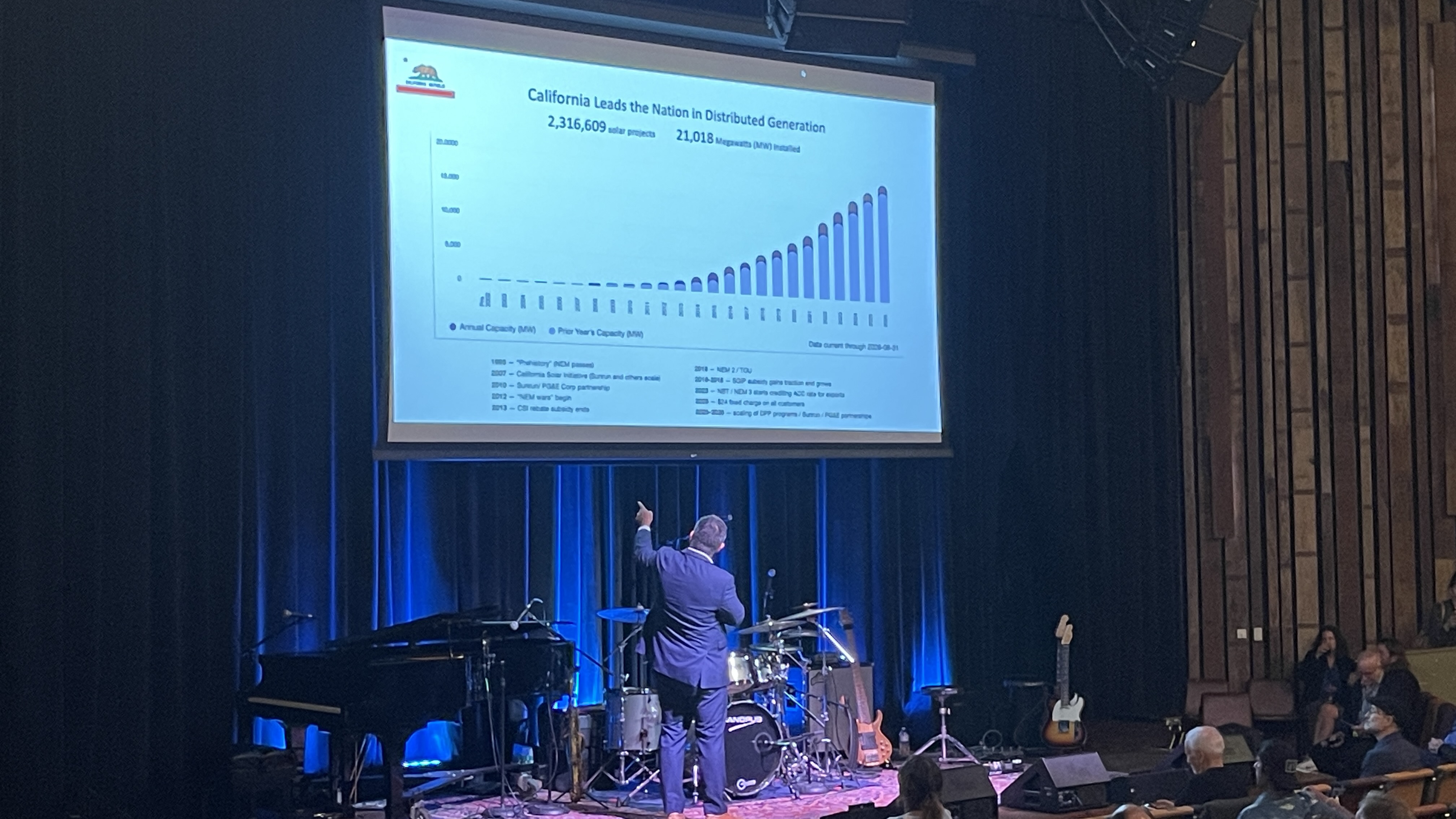
Walker Wright of Sunrun walked through the history as a case of moving the goalposts. First the fight was about the size of the rebate, from roughly 2007 to 2012. Then it was about the value of an exported electron under net metering. Now that batteries ship with the large majority of new California solar systems, about 74% in 2025 by Berkeley Lab's count and higher by installers' own numbers, he argues the unit of value is no longer one panel or one electron. It is the fleet: hundreds of thousands of batteries that can be aggregated into a virtual power plant and discharged when the grid needs it, funded in part by non-ratepayer money.
Dr. Leah Stokes extended the same logic to heat pumps, which are not just efficient heating. They are thermal storage. Preheat or pre-cool the building, bank heat in the water tank, and you have a flexible load that soaks up cheap midday power.
That connects to the most concrete California idea of the night: free electricity at midday. Governor-elect Becerra has endorsed a block, 1 to 3 p.m., where time-of-use prices drop to near zero. The driver is the duck curve. California makes so much solar at midday that the power is nearly worthless, so give it away and pull flexible load into that window. Los Angeles already runs a pilot through the Clean Power Alliance. Australia started its own version in 2026. And the key practical detail from Dr. Stokes: it does not need new legislation. It can be done inside an existing California Public Utility Commission (CPUC) rate-making docket.
Three critical pointers:
- Aggregation is a market-structure problem, not hardware. The DERs exists, how do they play together is key. Batteries are sitting at home but what is missing is fair compensation for what they provide. Capacity markets still undervalue storage, PJM worst of all. Until a battery gets paid what it is worth to the grid, the fleet stays underused.
- Free midday power is easy to say and hard to run. You have to backfill the lost revenue, from taxpayers or by shifting cost to the evening peak, without inventing a new unfairness. Unless a full restructuring of revenue is contemplated...
- What is the role of V2G or V2H in this? Today the storage that is real is stationary batteries and heat-pump thermal mass. Vehicle-to-grid and vehicle-to-home are a plausible next layer, technically and politically, but not yet the thing moving capacity.
California's execution gap
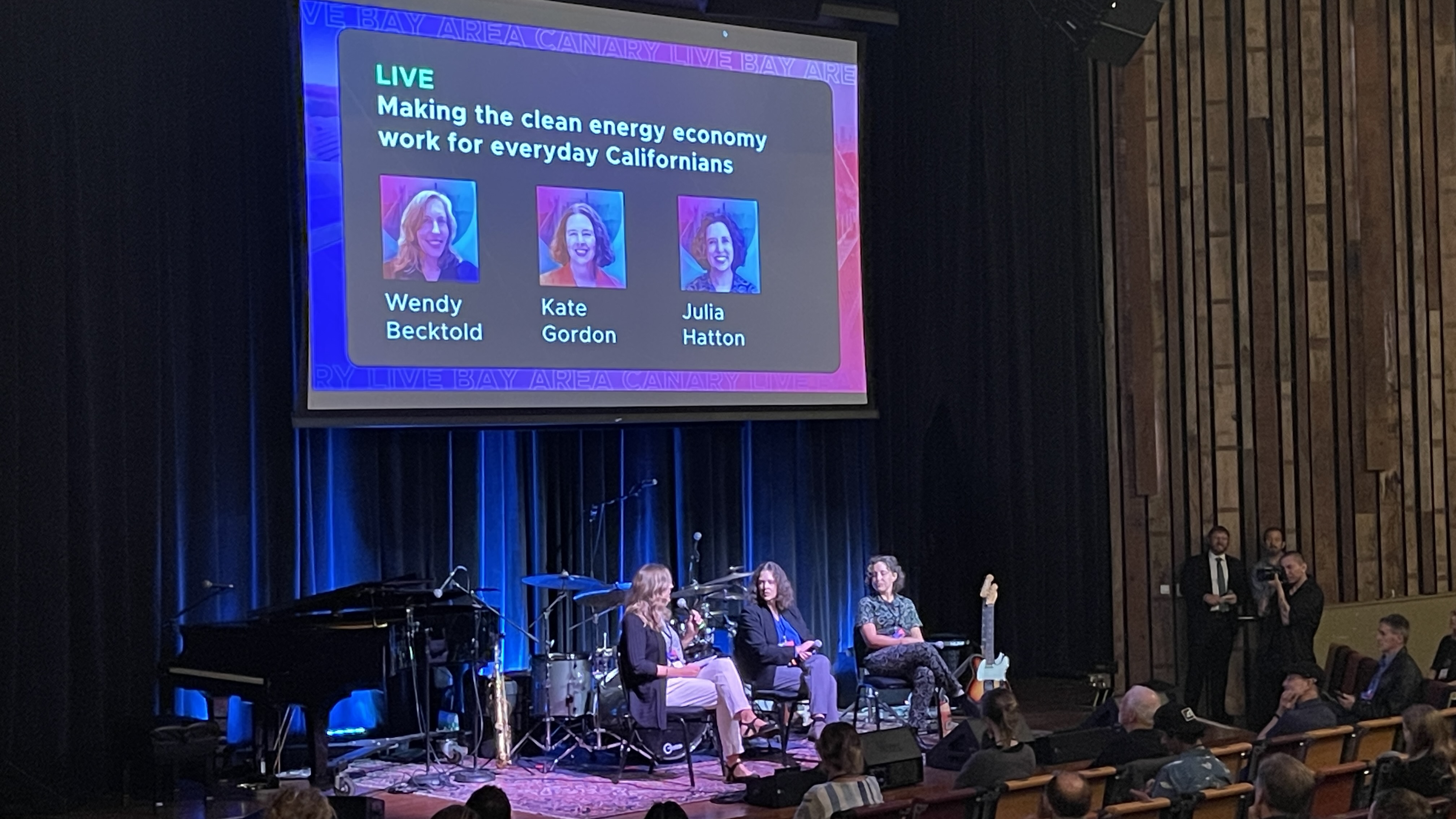
Kate Gordon of California Forward said the quiet part plainly. California leads at regulation. It is very good at setting ambitious goals and holding press conferences about them. It is not good at implementing them. That is the whole paradox in three sentences, and it is the thing a Becerra administration has to fix.
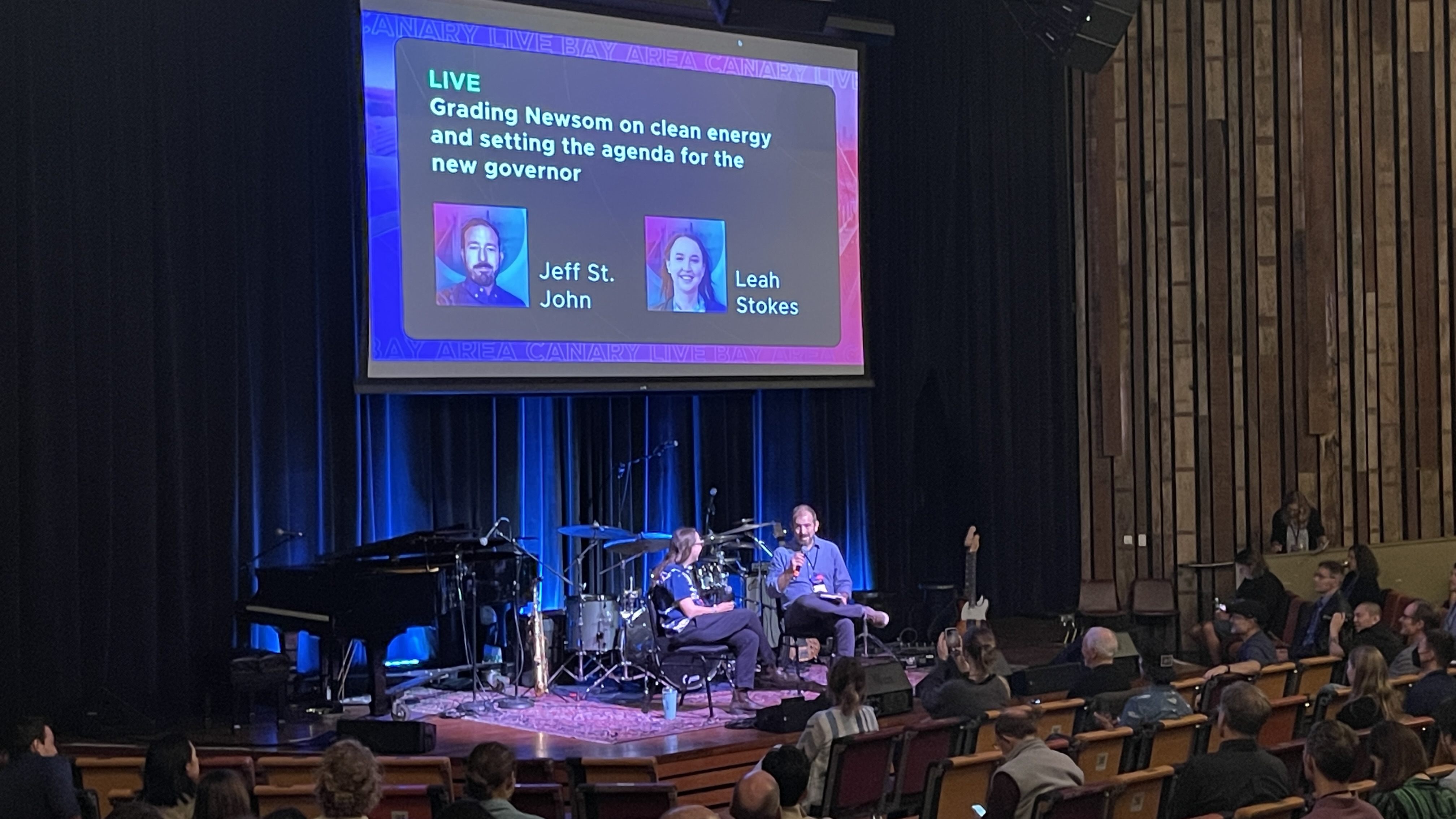
Dr. Leah Stokes graded Governor Newsom on electrification. Strong start: a commitment to phase out gas car and appliance sales, and a lot of solar and batteries deployed early. Then, somewhere in the middle, he turned on distributed solar. NEM 3 cut export credits. He vetoed a bill that would only have studied how to design an equitable community solar program for renters. He backed a $1.4 billion state loan to keep Diablo Canyon running, which Dr. Stokes calls an actual cost shift, because SB 846 spreads the plant's costs across all investor-owned utilities, so Southern California Edison (SCE) and San Diego Gas & Electric (SDG&E) customers pay for a plant in Pacific Gas & Electric (PG&E) territory. And he held back about $200 million in school electrification money while kids still sit in 93-degree classrooms.
Becerra's to-do list is actionable:
- Free midday power and industrial electrification tariffs both live in existing CPUC dockets.
- Hold utilities accountable for the real cost driver, which is overbuilding transmission and distribution, not the public benefits charge that funds school air conditioning.
- Get wildfire costs off ratepayer bills. Wildfire charges run about 14 to 17% of an SCE bill on their own, and closer to a third once other mandated costs are bundled in, and they fall hardest on people who can least afford them.
Prof. Stokes quoted Elizabeth Warren: personnel is policy. Becerra appoints commissioners and advisors in the new year, and those picks decide whether any of the above happens.
And one caveat that should temper the entire jobs story: a green job is not automatically a good job. Julia Hatton of Rising Sun ran residential solar and weatherization training during the 2009 stimulus and shut it down, because those jobs kept people in poverty. Residential building-decarbonization workers still earn less than the average construction worker. If the affordability agenda does not also produce careers people can live on, it loses the ability to become an agent of economic development.
Washington is a holding action. 2028 is the deadline.
Focus on the states and their ability to drive action. At the federal level, two narrow exceptions are worth watching. First, boring bipartisan bills can still become law. The 21st Century ROAD to Housing Act took effect in July 2026 after Trump found it so dull he neither signed nor vetoed it, calling it "a big yawn." Do good policy, give it the most boring possible name, and let it slide through. Second, small zero-carbon measures with cross-party appeal, on things like advanced geothermal or nuclear, have a real shot.
The deeper federal critiques, from Charles Hua, are structural and worth borrowing for any serious reform argument. We build the grid backwards, starting with local transmission instead of the interregional backbone a system-optimal grid would build first. We plan the distribution system and the bulk power system in separate silos. And we reward capital spending over getting more out of the grid we already have. Fixing capacity markets so batteries get paid their real value is the single clearest lever.
The next hundred days set the 2027 state legislative agendas, and those agendas become the 2028 presidential platforms. Shapiro, Pritzker, and the rest of the field already know energy affordability is a winning issue, because voters raised utility bills and data centers unprompted at the doors. Hua called it the energy affordability primary.
What I'm watching
Here are the specific signals that will tell you whether this moment turns into policy or evaporates:
- Action at Democratic trifectas. How many of the new trifectas pass something in 2027 that actually lowers a bill or moves capacity, versus how many announce a goal.
- Commissioner appointments. The governor-appointed PUC seats, and who Becerra names in California. Personnel is the tell.
- The midnight dockets. Watch for more Georgia-style certifications rushed through before new commissioners are seated.
- Battery compensation. Whether any capacity market starts paying storage what it is worth. That is the unlock for the whole virtual power plant thesis.
- California delivery. Whether free midday power and the school electrification money actually land, or get studied to death for the next five years. Whether VPPs and DERs expand critically.
- Job quality. Whether the affordability agenda produces careers people can live on, or repeats the 2009 mistake of training people for jobs that keep them poor.
Power is on the ballot. Whether it becomes policy depends on what these winners do in the next hundred days.
Sources
- California governor result: CalMatters, California picks Xavier Becerra to replace Gavin Newsom
- Becerra's Power Hour: California Power Hour
- New Democratic trifectas and the doubled map: Inside Climate News, Democrats' Big Statehouse Wins Could Transform Climate and Energy Policy
- Congressional majorities: Ballotpedia, Democrats win U.S. House and Senate majorities
- Georgia PSC flip: Atlanta Journal-Constitution, Democrats win PSC majority
- Georgia Power December certification (9,885 MW): Georgia PSC media advisory, December 19, 2025
- Alabama PSC primary: Alabama Reflector, GOP voters reject one Alabama PSC commissioner
- Battery attachment rate (74% in California, 2025): pv magazine, Battery storage paired with 37% of new U.S. residential solar systems in 2025
- Becerra's Power Hour and the LA pilot: Legal Planet, How Would Gov. Xavier Becerra's Power Hour Work?
- Diablo Canyon loan and cost shift: San Francisco Chronicle, How Newsom saved Diablo Canyon
- CalSHAPE school funds returned to utilities: CalMatters, California lawmakers let schools' AC funding lapse
- SCE wildfire cost share: Southern California Edison, Powering Progress
- Housing bill becoming law without a signature: ABC7, Trump lets bipartisan housing bill become law without signing
- PowerLines governor playbook: PowerLines, Playbooks